
Key takeaway
Winter weather makes medical rides harder. Here is what to look for when booking wheelchair and medical transportation during Massachusetts winters.
Massachusetts winters can create serious transportation challenges for patients traveling to medical appointments. Snow, ice, freezing temperatures, and unpredictable weather can make it difficult for seniors, individuals with mobility challenges, and wheelchair users to safely get to healthcare appointments.
Choosing the right medical transportation provider during the winter is about more than finding a ride. It is about safety, preparation, reliability, and peace of mind.
Frequently Asked Questions About Winter Medical Transportation
Why is winter transportation more difficult for medical patients? Winter conditions can create additional challenges including snow covered walkways, icy surfaces, difficulty entering and exiting vehicles, delayed traffic, and increased fall risks. Patients with limited mobility may face greater risks when traveling during severe weather.
What should I ask before booking winter medical transportation? Patients and families should ask: does the vehicle have wheelchair accessibility, does the company monitor weather conditions, are drivers experienced with winter conditions, does the company provide assistance from the door to the vehicle, and how does the company handle severe weather delays?
Why is vehicle preparation important during winter? A professional medical transportation company should maintain vehicles properly throughout the year. Winter preparation includes proper tire maintenance, regular vehicle inspections, emergency preparedness, and safe operation during challenging weather conditions.
Why Door Through Door Assistance Matters During Winter
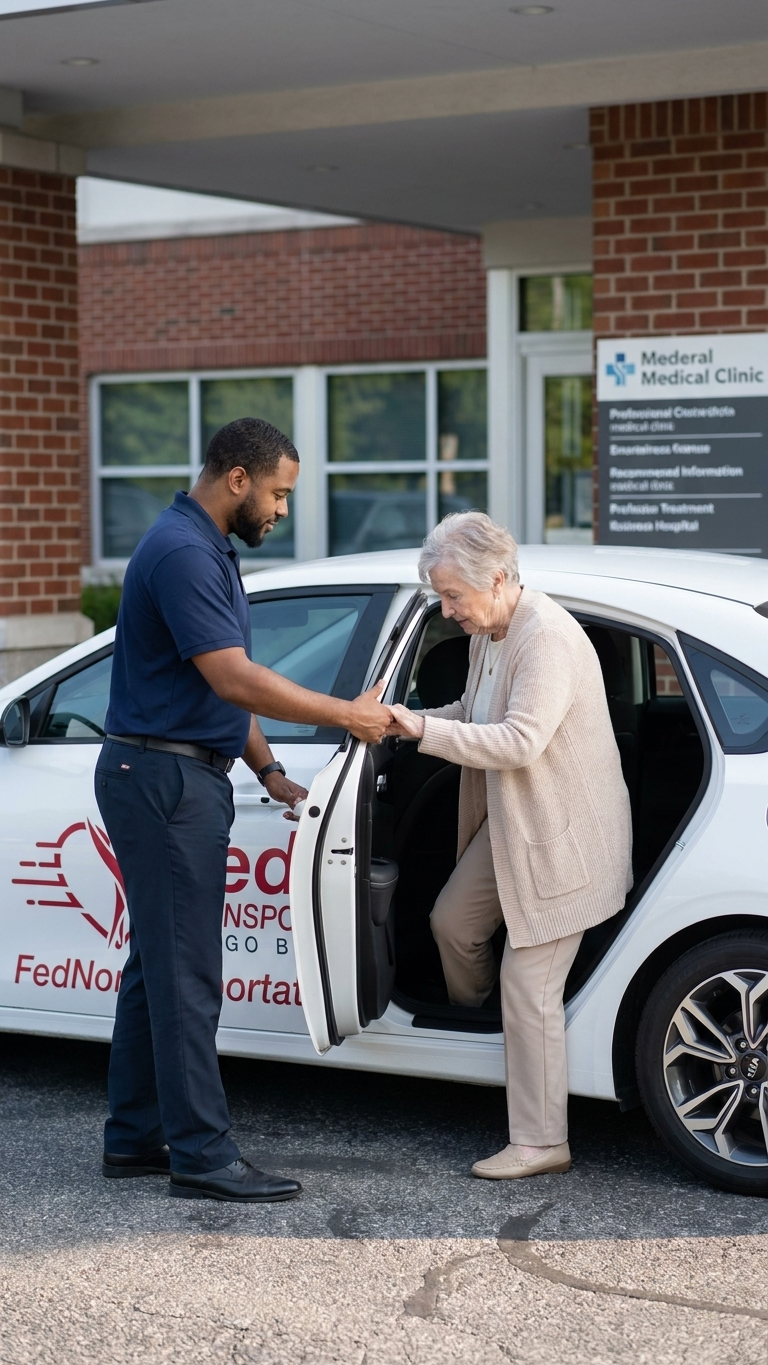
For many patients, the most difficult part of transportation is not the drive itself — it is getting safely from the building entrance to the vehicle. Snow and ice can create hazards in parking lots, sidewalks, building entrances, and ramps. Door through door assistance provides additional support for patients who need help navigating these areas.
Why Standard Rideshare Services May Not Be Enough During Winter
Traditional rideshare services are designed primarily for general transportation. Medical transportation requires additional considerations including mobility assistance, wheelchair accessibility, patient comfort, additional loading time, and healthcare appointment scheduling needs. During winter conditions, these differences become even more important.
Preparing For Your Winter Medical Transportation Ride
- Schedule rides early
- Allow extra travel time
- Keep appointment details available
- Dress appropriately for weather conditions
- Inform the transportation provider about mobility needs
The Winter Transportation Problem Nobody Talks About: The Walk From the Door to the Vehicle
When people think about winter transportation, they usually think about roads. But for many patients, the greatest risk happens before they enter the vehicle. Imagine an elderly patient who uses a walker. The appointment is scheduled. Transportation arrives on time. The vehicle is accessible. But overnight snow created a slippery front walkway, a hidden patch of ice, a snowbank blocking the safest path, or a ramp that was not fully cleared. The transportation challenge is no longer just driving — it becomes safely assisting the passenger through winter conditions.
Why Wheelchair Users Face Unique Winter Transportation Challenges
Wheelchair users often face challenges other passengers do not experience. Snow and ice can create problems with wheelchair maneuverability, ramps and accessible entrances, uneven surfaces, snow accumulation around vehicles, and limited access to building entrances. A wheelchair accessible vehicle is only one part of safe transportation. The entire pickup and drop-off process matters.
Dialysis and Cancer Treatment Transportation During Winter
Dialysis patients often require consistent treatment schedules. A winter storm can create stress for patients worried about whether transportation will arrive, whether roads are safe, and whether their appointment can be reached on time. Reliable transportation planning helps reduce unnecessary stress during already difficult situations.
Cancer patients may experience fatigue, weakness, increased sensitivity to cold temperatures, and difficulty walking long distances. A winter transportation plan should consider more than getting from point A to point B — it should consider comfort, safety, and assistance throughout the entire journey.
FedNor Transportation: Safe Medical Transportation Through Every Season
Winter should not prevent patients from receiving the healthcare they need. FedNor Transportation provides dependable non emergency medical transportation throughout Massachusetts, helping patients safely reach medical appointments during every season. Our services include wheelchair transportation, ambulatory transportation, stretcher transportation, door through door assistance, and healthcare facility transportation. Whether it is a routine appointment or an important medical procedure, our goal is to provide safe, respectful, and reliable transportation for every passenger.
Need a ride you can trust?
FedNor Transportation provides safe, dignified non-emergency medical transportation across MetroWest Massachusetts.