
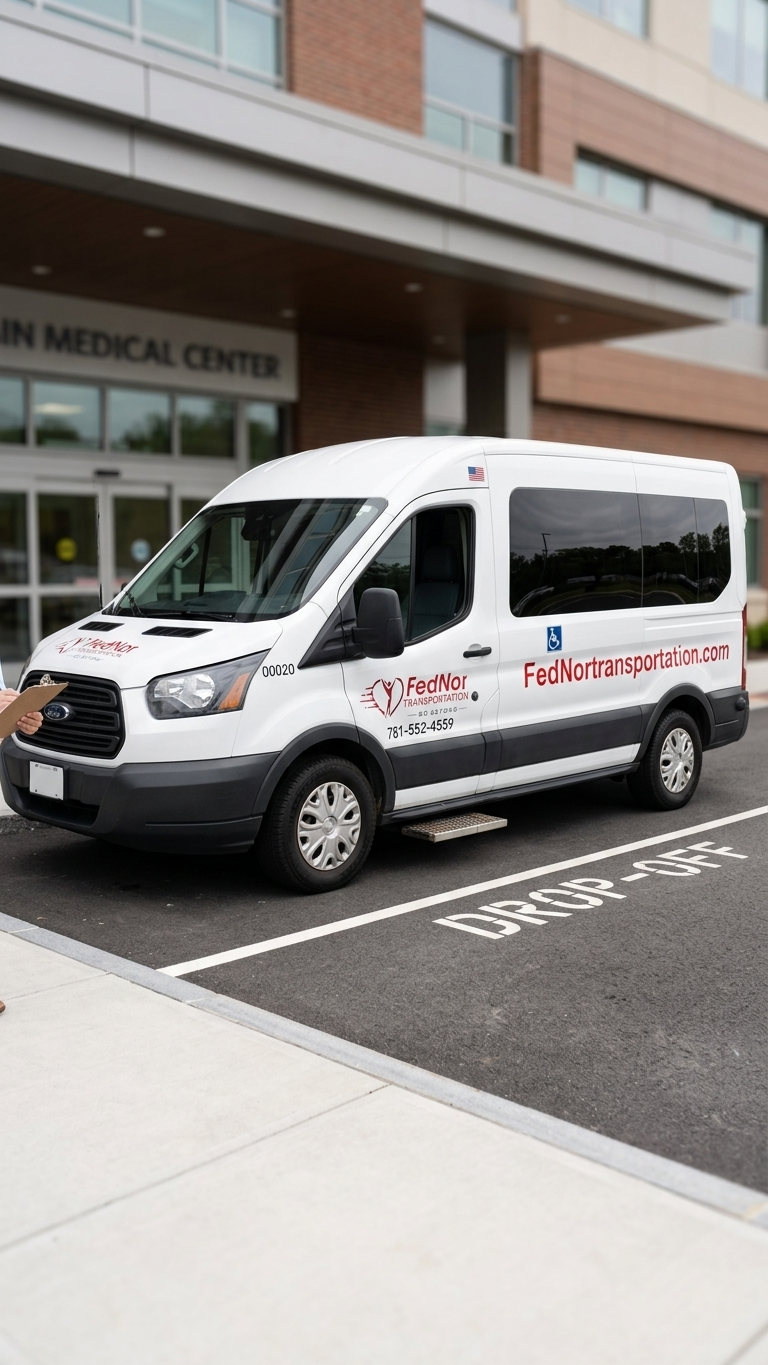
Nobody planned to still be at the hospital at 8 o'clock that night.
The family had transportation. Their ride showed up at the scheduled pickup time, brought them to the hospital, and got them where they needed to be. That part went exactly as planned.
The problem was that the appointment took much longer than expected. Eventually, the transportation company that brought them there was no longer available for the return trip. And when the appointment was finally over, the family found themselves sitting at the hospital with a father who used a wheelchair and no ride home.
At around 8 PM, our phone rang. The person on the other end said something very close to: "Hi, I'm at Newton-Wellesley Hospital right now. I'm with my father and we're trying to get home. Do you have anyone available? He's in a wheelchair."
That's the kind of call that stays with you. Not because something dramatic happened. Because it shows how quickly an ordinary medical appointment can turn into a transportation problem nobody expected.
Sometimes Nobody Did Anything Wrong
This is important. It's easy to hear a story like this and immediately ask: "Why didn't they plan a return ride?"
But sometimes they did plan. Medical appointments don't always follow a clock. An appointment scheduled for the afternoon can involve waiting for the doctor, testing, imaging, lab work, additional conversations, treatment, paperwork or something else the family couldn't have predicted. A patient may have absolutely no idea whether they'll be finished at 3:30, 5:00 or much later.
The transportation provider has a schedule too. That driver may have other passengers waiting. The vehicle may be needed somewhere else. The company's operating day may be ending.
So this isn't necessarily a story about a transportation company abandoning somebody. It's a story about an uncomfortable gap that can happen when medical care takes longer than transportation plans can accommodate. And when it happens late in the day, finding another ride can become much harder.
"Can Someone Pick Us Up From the Hospital Tonight?"
Possibly. But there is a big difference between possible and guaranteed. After-hours transportation isn't like ordering a regular car. If Dad uses a wheelchair, you need an appropriate wheelchair-accessible vehicle. That vehicle has to be available. An appropriate driver has to be available. The driver might already be transporting another passenger. The closest available vehicle might be an hour away. And we still need to know where the passenger is going.
When a call like this comes into FedNor, we don't automatically say yes before understanding the situation. We start figuring it out.
- Where are you?
- Where are you going?
- What kind of wheelchair does the passenger use?
- How many people are traveling with the patient?
Then we start looking at what's happening operationally. Who is still available? Where are our drivers? How far is the closest appropriate vehicle from the hospital? Where does the passenger need to go? Can we realistically complete the trip?
Sometimes the answer is yes. Sometimes it isn't. That's the reality of an unscheduled late-night request.
What Happens After You Call?
This is something passengers don't normally see. You make one phone call. Behind that phone call, someone may immediately start trying to piece together a solution.
When we receive an after-hours request, we start planning. We check which drivers are still open. We look at where they are. We look at how far they are from the patient. Then we look at how far the patient needs to travel. If the passenger uses a wheelchair, we need the appropriate vehicle.
It's not simply: "Do you have a driver?" It's: "Do we have the right driver and vehicle in a place where this trip can realistically be handled?" A driver 15 or 20 minutes away creates one situation. A driver two hours away at 9 PM creates a completely different one.
That's why someone calling for a late-night ride may hear: "Give us a moment and let us see what we have available." The person answering isn't necessarily hesitating. They may be trying to solve the problem.
I Have a Wheelchair. Can Uber or a Regular Car Take Me?
This depends on the passenger and their mobility needs. Some wheelchair users can transfer safely into a regular vehicle and travel without remaining in their wheelchair. Others cannot.
Some people use manual wheelchairs. Some use power wheelchairs. Some use larger or specialized chairs. That's why one of the questions we ask is: "What kind of wheelchair does he use?"
Don't assume every wheelchair passenger can simply transfer into the back seat of a regular car. And don't attempt a transfer that isn't safe simply because it's getting late and everyone wants to go home. If the passenger requires wheelchair-accessible transportation, tell the company exactly what they use.
"My Appointment Ran Late and My Ride Left. What Do I Do?"
Start with the transportation provider that was supposed to bring you home. Find out whether the vehicle is actually gone for the evening or whether another return arrangement is possible.
If they cannot provide the return trip, ask the hospital staff whether they have transportation resources or recommendations available. Then start contacting appropriate transportation providers.
When you call, don't spend the first five minutes explaining the entire day. Start with what the dispatcher needs to know: "I'm at the hospital right now with my father. He's in a wheelchair. Our original transportation is no longer available. We're trying to get home tonight."
Then give them:
- Your hospital
- Your destination
- Wheelchair type
- Number of passengers
- Any important accessibility information
If there are stairs at the destination, mention that too. The faster the provider understands the actual transportation need, the faster they can determine whether they can help.
"Can I Get a Wheelchair Ride at 8 PM?"
Maybe. That's the most responsible answer.
There are nights when an appropriate vehicle and driver may be available. There are other nights when every appropriate vehicle is committed, drivers are far away, or the requested destination makes the trip unrealistic. For example, a request at 9 PM from someone two hours away can be extremely difficult to accommodate.
That doesn't mean the person answering doesn't care. It means transportation has physical limits. A vehicle can't be in two places at once. And specialized transportation becomes even more complicated because not every vehicle can accommodate every passenger. So if you're calling late, call as soon as you know you may need another option. Don't wait an additional hour hoping the problem will somehow resolve itself.
"Does FedNor Provide 24-Hour Transportation?"
We wouldn't describe an occasional late-night accommodation as guaranteed 24-hour availability. That's an important distinction.
FedNor may be able to accommodate after-hours and late-night transportation requests depending on driver availability, vehicle availability, passenger needs, pickup location and destination. Sometimes we can make it work. Sometimes we can't.
We'd rather tell someone the truth than advertise "24/7 transportation" and then leave a family believing a vehicle is guaranteed when it isn't. If you know in advance that you'll need transportation outside normal hours, arranging it ahead of time gives the provider a much better opportunity to plan.
"What If I Don't Know When My Appointment Will End?"
This may be the hardest part. Sometimes you genuinely don't know. That's why I don't like telling families: "You should have known what time you'd be finished." They couldn't necessarily know.
A new specialist appointment may take longer than expected. A procedure may be delayed. The doctor may be running behind. Additional testing may be ordered. A family might arrive expecting two hours and end up there for five. That's healthcare.
Instead of trying to predict the impossible, ask your transportation provider what happens if the appointment runs late. That's a much more useful conversation.
Questions Worth Asking Before You Leave Home
You don't need to interrogate your transportation provider. But if there's a real possibility that an appointment could run long, a few questions can save considerable confusion later:
- What happens if my appointment runs longer than expected?
- Will the driver wait for me?
- If the driver leaves, how do I request my return trip?
- Is my return scheduled or flexible?
- How much notice do you need when I'm ready?
- What happens if I'm not finished by my scheduled return time?
- Do you provide transportation after your normal business hours?
- Is after-hours service guaranteed or based on availability?
- Who should I call if my appointment runs late?
- Will someone answer that number in the evening?
- What happens if the appointment runs two hours late?
- Is there a waiting-time charge?
- How long can the driver reasonably wait?
- If the driver has to leave, can another vehicle pick me up?
- Does my wheelchair type affect after-hours availability?
- Can my caregiver ride with me?
- If I have stairs at home, do I need to arrange that separately?
- What happens if I finish after the transportation company's operating hours?
- If you can't bring me home, what should I do?
- Should I call before I know exactly when I'll be finished?
Those questions don't guarantee that an appointment will go according to plan. They simply help you understand what happens when it doesn't.
"My Ride Never Came. Who Can I Call?"
First determine what's actually happening with the original transportation. Call the provider. Ask whether the vehicle is delayed, whether the return is still active, and what estimated information they can provide. If the original provider confirms that they cannot complete the trip, then you can start exploring alternatives.
If you're at a hospital, don't be embarrassed to tell hospital staff: "Our transportation fell through and we're trying to figure out how to get home." They may be able to tell you what resources are available through the facility or your coverage.
If you have insurance-funded transportation, contact the appropriate transportation program or health plan to understand your options before automatically paying privately. Private transportation is another possibility when appropriate.
"My Mom's Ride Left Because Her Appointment Took Too Long. Is That Normal?"
There isn't one universal answer. Different transportation arrangements work differently. Some trips have scheduled returns. Some use a will-call arrangement. Some involve paid waiting time. Some providers can wait for a certain period. Some drivers have other scheduled passengers and eventually need to leave.
Before becoming angry with a driver who left, find out what transportation was actually booked. The driver may have another patient waiting for dialysis, a discharge, an appointment or a ride home.
The family sitting inside the hospital may understandably be thinking: "Please don't leave us." At the same time, another family somewhere else may be thinking: "Where is our driver?" Both families matter. That's why expectations around waiting and return transportation are so important.
"Should I Schedule a Return Time or Use Will Call?"
It depends on the trip and what the transportation provider offers. A scheduled return works well when you have a reasonably good idea when you'll finish. But medical appointments aren't always predictable. A flexible or will-call return may make more sense when the ending time is uncertain. However, families should understand something important: will call does not necessarily mean a vehicle is sitting outside waiting for you.
Ask the provider exactly how its will-call service works. How long might the return take? Does the driver leave? How is the return dispatched? What happens late in the evening? Those are much better questions than assuming all providers use "will call" the same way.
We walk through how pickup windows, waiting and return planning actually work in our guide to appointment-day ride timing.
"Can the Driver Just Wait Outside Until I'm Finished?"
Sometimes waiting can be arranged. But remember what you're requesting. If a vehicle and driver remain dedicated to one passenger for several hours, that vehicle cannot be used to transport someone else during that period.
Providers may charge waiting time, limit waiting, require advance arrangements, or handle extended appointments differently. If you know you want the vehicle to remain available, ask specifically about wait-and-return service and the applicable charges and conditions. Don't assume waiting is automatically included with transportation.
What If It's a Hospital Discharge Late at Night?
Late hospital discharges create many of the same problems. Someone may have arrived by ambulance days earlier and never thought about transportation home. Now it's evening. The patient is medically cleared. The family has a regular car, but Dad now uses a wheelchair. Or Mom can't safely travel seated and the family has been told she requires different transportation.
Start planning as soon as you know discharge is becoming likely. Even if the hospital cannot give you an exact time, you can begin finding out what transportation options exist. Our guide to getting a loved one home from the hospital in a wheelchair covers the details that matter most. Waiting until the patient is standing — or sitting — in the lobby ready to leave reduces everyone's options.
Can You Take My Father Home If I'm Riding With Him?
Tell the provider how many people are traveling. That's one of the questions we ask on late requests: how many people are with the patient? Don't assume there will automatically be space for several family members. If Dad is traveling in his wheelchair and two relatives want to accompany him, say that when requesting the trip. Again, small details matter.
What If There Are Stairs When We Get Home?
Say it before the vehicle arrives whenever possible. Late at night is a particularly bad time to discover that transportation only solved the first half of the problem. If the passenger cannot safely manage the stairs, additional assistance or equipment may be necessary.
Tell the provider: There are stairs. How many? Inside or outside? Does the passenger normally walk them? Do they need specialized assistance? Don't assume that booking a wheelchair vehicle automatically includes stair-chair service.
Can I Call for Just Stair-Chair Help After Another Ride Brings Us Home?
Depending on the provider and availability, standalone stair-chair assistance may be an option. That's useful for families who already solved the transportation problem but realize they still need appropriate help getting their loved one into the residence. Our patient support services page explains how it works.
Again, arrange it beforehand whenever possible. An unscheduled stair-chair request late at night may require different staff and equipment, and availability cannot be assumed.
What If We Are Two Hours Away?
Call and explain the situation. But understand why the answer may be different. If it's 9 PM and the nearest appropriate vehicle is two hours away, the transportation company has to consider:
- The driver's current location.
- Travel time to you.
- Travel time from the hospital to your destination.
- The type of vehicle required.
- The passenger's mobility needs.
- Staffing.
- How late the trip would ultimately finish.
There are situations where a company genuinely wants to help but cannot safely or realistically put that trip together. That isn't the answer a stranded family wants to hear. But it's better than being promised a vehicle that isn't actually coming.
"We're Stranded. Does This Count as an Emergency?"
Being stuck without transportation can absolutely feel urgent. But urgent transportation and a medical emergency are not the same thing.
If the passenger is medically stable and simply needs appropriate transportation home, that's one situation. If the passenger is experiencing a medical emergency, significant medical deterioration, or requires emergency medical care during transportation, don't spend time calling ordinary non-emergency transportation companies. Call 911 or follow the instructions of the healthcare professionals caring for the patient. Non-emergency medical transportation is not a replacement for emergency medical services.
A Note for Sons, Daughters and Caregivers
If you're reading this at 8:30 at night from a hospital waiting area because your parent's transportation fell apart, you're probably tired. Maybe you've been there since morning. Maybe your father is asking when you're leaving. Maybe Mom is uncomfortable. Maybe you've already called five numbers. And maybe every company is asking you questions you don't know how to answer.
Start simple:
- Where are you?
- Where are you going?
- Does your loved one use a wheelchair?
- What kind?
- How many people are traveling?
- Are there accessibility issues at home?
You don't need to understand the entire transportation industry before making the call. Tell the dispatcher what's happening. Let them tell you what information they need.
A Note for Nurses, Case Managers and Hospital Staff
When you're helping a patient find transportation late in the day, mobility details can save valuable time. Instead of simply telling a provider: "I need a ride for a patient," have the basic transportation information available when possible:
- Is the patient ambulatory?
- Wheelchair?
- Power wheelchair?
- Stretcher?
- Where are they going?
- How many people are traveling?
- Are there stairs or other known accessibility concerns at the destination?
- Does the patient have their own wheelchair?
The transportation company still has its own intake process, but accurate information helps everyone determine much faster whether the trip can be accommodated.
If You're Calling FedNor Late at Night
We'll ask you what we need to understand the trip. Then we'll look at what is realistically available. We may start calling drivers. We'll see who's open. We'll look at where they are. We'll determine what appropriate vehicle is available. We'll look at where you're going. And if we're able to accommodate the trip, we'll explain the next steps.
But we don't want people reading this article to believe that every late-night request is guaranteed. It isn't. Sometimes we can help. Sometimes distance, timing, vehicle availability or staffing makes it impossible. If we can't realistically provide the trip, we'd rather be clear about that than tell a tired family what they want to hear and leave them waiting for a vehicle that isn't coming.
The Bigger Lesson Isn't "Always Book Earlier"
That would be too easy. And it wouldn't be fair. Sometimes you can't know when a medical appointment will finish. Sometimes you did plan. Sometimes the appointment simply had other plans.
The better lesson is this: know what happens when the original plan changes. Before a long appointment, ask about the return. Understand whether the driver is waiting. Understand what "will call" means. Know who you're supposed to contact. Know whether evening service is available. Know what happens if the appointment runs several hours late.
And if you end up sitting in a hospital at 8 PM trying to find a wheelchair ride home anyway, start with the basics and explain what you need. There may be another option.
The family who called us from Newton-Wellesley that evening didn't wake up expecting to search for transportation at 8 PM. They already had a transportation plan. The day simply lasted longer than the plan did.
And sometimes that's exactly when a family needs someone on the other end of the phone who understands the question they're really asking: "We're finally ready to go home. Is there any way you can help us get there?"
If you're planning ahead for a trip like this, you can submit the details through our ride request page and we'll follow up with a quote when we're able to accommodate the trip.
Need a ride you can trust?
FedNor Transportation provides safe, dignified non-emergency medical transportation across MetroWest Massachusetts.