
Key takeaway
Waiting until appointment day is too late. How planning ahead helps Massachusetts patients avoid missed rides, missed care, and last-minute stress.
Every day across Massachusetts, patients miss appointments, families experience unnecessary stress, and caregivers are forced into last-minute problem solving because transportation planning started too late.
The situation often looks the same: a patient has a medical appointment tomorrow, a family member was expected to provide transportation, and then something changes. The family member has to work. The vehicle is unavailable. The patient's mobility needs have changed. The patient recently had surgery and cannot safely get into a regular vehicle. A caregiver suddenly realizes they need a wheelchair accessible option.
Now the search begins: "Wheelchair transportation near me." "Medical transportation Massachusetts." "How do I get my parent to a doctor appointment?" At that moment, the family is no longer planning. They are reacting. This is what we call the 24-hour problem.
At FedNor Transportation, we believe medical transportation should never be an emergency decision made under pressure. Reliable transportation starts with preparation, communication, and understanding the patient's specific needs before the appointment arrives.
The Mistake Many Families Make: Waiting Until the Last Minute
One of the most common mistakes families make is assuming transportation will always work itself out. For years, many patients rely on family members, friends, or their own vehicle to get to appointments. That works — until circumstances change.
A daughter who normally drives her parent may have an unexpected work obligation. A spouse who provides transportation may become unavailable. A patient who used to walk independently may now require a wheelchair after surgery. A vehicle that was once comfortable may no longer safely accommodate someone with limited mobility. These changes often happen faster than families expect.
The challenge is that medical appointments are not always flexible. A missed appointment can mean delayed treatment, rescheduled procedures, missed follow-ups, increased stress for patients and caregivers, and additional coordination with healthcare providers. Planning transportation before appointment day gives families time to choose the right provider, explain mobility needs, and avoid unnecessary complications.
Why Seniors and Patients With Mobility Challenges Need Transportation Planning
Mobility changes often happen gradually. Someone who drove themselves for decades may eventually need additional support because of aging, surgery recovery, injury, chronic medical conditions, balance concerns, limited mobility, or temporary physical restrictions.
Many families wait until transportation becomes impossible before exploring medical transportation options. However, recognizing changing needs early can make the transition easier. A patient who needs wheelchair transportation may require a wheelchair accessible vehicle, proper securement, assistance getting from their residence to the vehicle, extra time for safe boarding, and a driver trained to assist individuals with mobility limitations. Medical transportation should be viewed as part of a patient's healthcare preparation, just like arranging medications, confirming appointments, or preparing paperwork.
The Role of Caregivers in Transportation Decisions
Caregivers carry an enormous amount of responsibility — coordinating medical appointments, transportation, medication schedules, communication with providers, follow-up care, and daily support needs. Transportation is often one of the biggest challenges because it requires coordination around everyone's schedule.
Reliable medical transportation removes one major responsibility from an already demanding role. Instead of worrying "Who will drive them? Will they be safe getting into the vehicle? Will we make it on time?" caregivers can have confidence knowing transportation has already been arranged. Every ride affects more than just the passenger. It affects families, caregivers, healthcare providers, and the patient's ability to receive care.
Why Medical Transportation Requires More Than a Vehicle
Many people assume medical transportation is simply a driver and a vehicle. But there is a major difference between a regular ride and professional medical transportation. A ride means "someone drives you somewhere." Medical transportation means "a service designed around a patient's medical and mobility needs."
A professional medical transportation service considers wheelchair securement using proper safety standards, door-through-door assistance for patients who need help getting from their home entrance to the vehicle, communication with hospitals, rehabilitation centers, dialysis facilities, and assisted living communities, and appointment timing awareness for scheduled procedures, dialysis, specialist visits, and discharge transportation.
Transportation Is a Healthcare Access Issue
Healthcare does not begin when a patient enters a doctor's office. It starts before the appointment — scheduling the appointment, finding transportation, ensuring accessibility, arranging safe arrival, and returning home safely. Transportation barriers are healthcare barriers. A patient may have the best doctors, the right treatment plan, and necessary follow-up care, but if they cannot safely reach those services, access becomes limited. Medical transportation plays a critical role in helping patients stay connected to the healthcare system.
Why Planning Ahead Creates Better Outcomes
Booking transportation early provides more options — last-minute requests may limit availability. It enables better communication, so families can discuss mobility requirements, pickup locations, appointment times, and special considerations. And it reduces stress, allowing patients and caregivers to focus on what matters most: their health.
FedNor Transportation: Helping Massachusetts Patients Travel With Confidence
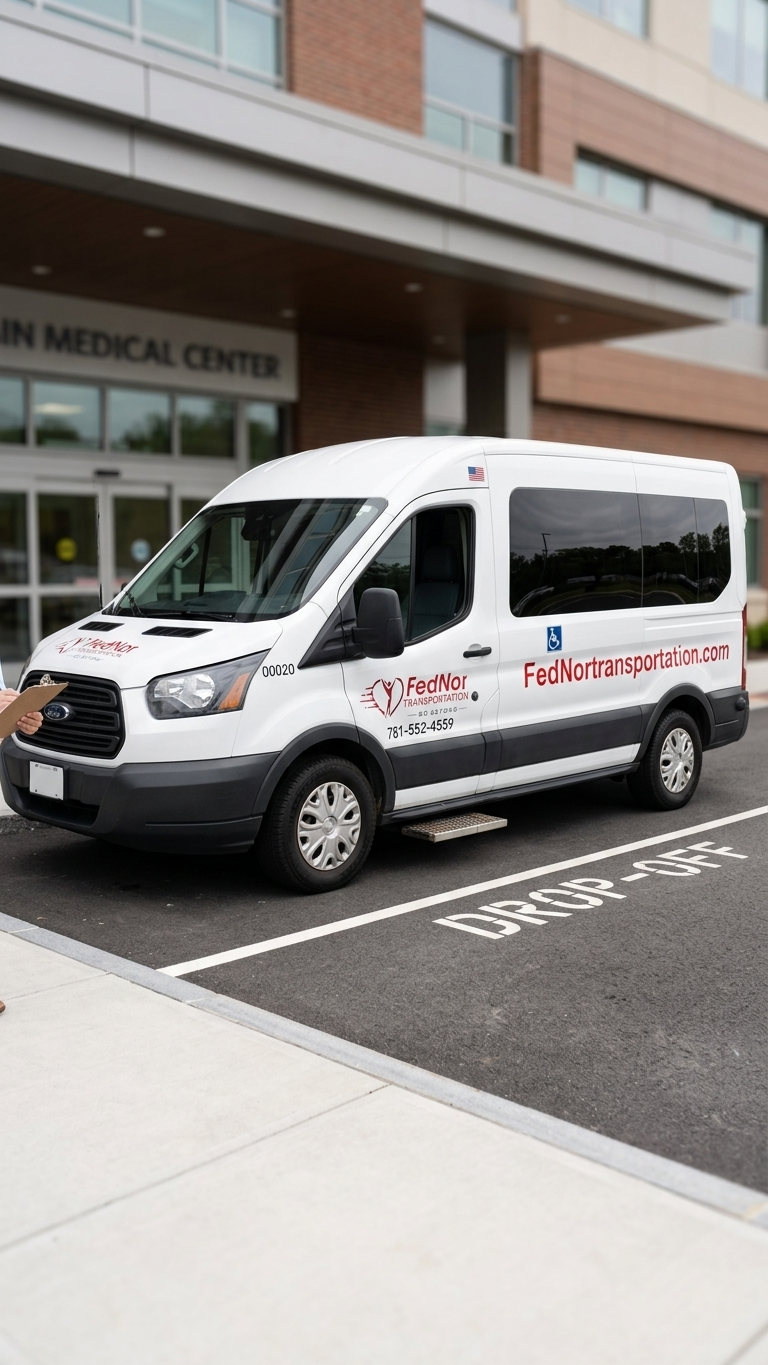
At FedNor Transportation, our mission is built around helping Massachusetts patients access healthcare safely and reliably. Our services include wheelchair transportation, ambulatory medical transportation, stretcher transportation, door-through-door assistance, transportation for medical appointments, and transportation for seniors and individuals with mobility challenges.
The biggest transportation problems often happen when families wait until the last possible moment. A medical appointment should not become a transportation emergency. The question should not be "Who can drive tomorrow?" — the better question is "What transportation provider can safely support this patient's needs?" Because when healthcare cannot wait, transportation should already be ready. Call 781.552.4559 to plan ahead.
Need a ride you can trust?
FedNor Transportation provides safe, dignified non-emergency medical transportation across MetroWest Massachusetts.