
Key takeaway
Private ambulances and NEMT are not the same service. Learn which one you actually need, what each costs, and when to call which.
Many people searching for a ride to a medical appointment end up typing things like "private ambulance services near me" or "emergency medical transportation" into Google, not realizing those searches are pointing them toward the wrong type of service entirely. The confusion is understandable, but it can cost patients time, money, and unnecessary stress. Understanding the difference between a private ambulance and non-emergency medical transportation (NEMT) is the first step toward finding the right ride for your situation.
What Is a Private Ambulance?
A private ambulance is a medical transport vehicle staffed by licensed emergency medical technicians or paramedics and equipped with clinical tools to monitor and treat patients during transport. These services exist for situations where a patient's condition may change or deteriorate while in transit. Think post-surgery complications, acute illness, or transport between hospital facilities for patients requiring continuous clinical oversight. Private ambulances are equipped with oxygen, cardiac monitors, IV lines, and other life-saving equipment. They are designed for medically complex or potentially unstable patients who need hands-on care throughout the ride.
Because of the staffing, equipment, and liability involved, private ambulance transport is significantly more expensive than NEMT, often running hundreds to over a thousand dollars per trip depending on distance and level of care required. Insurance coverage for private ambulance transport typically requires documented medical necessity, and claims are frequently scrutinized or denied if the patient's condition did not meet the threshold for that level of service.
What Is Non-Emergency Medical Transportation?
Non-emergency medical transportation, commonly referred to as NEMT, is designed for patients who are medically stable but need assistance getting to and from healthcare appointments. This includes routine trips to dialysis centers, oncology infusions, physical therapy, primary care visits, specialist consultations, post-procedure discharge, and more. NEMT passengers do not require clinical care during the ride. They simply need a safe, reliable, and sometimes accessible vehicle with a trained driver who understands their needs.
NEMT vehicles range from standard ambulatory sedans for passengers who can walk and transfer independently, to wheelchair-accessible vans equipped with ramps or lifts and tie-down systems for passengers using manual or powered wheelchairs, to stretcher transport for passengers who cannot sit upright but do not require emergency-level care. The common thread across all NEMT services is that the patient is stable and the trip is planned in advance rather than dispatched in response to an emergency.
Why the Confusion Exists
The overlap in terminology is a big part of the problem. Words like "ambulance," "medical transport," and "emergency transportation" get used interchangeably in everyday conversation, even when the situation does not involve an emergency at all. Families caring for elderly or disabled loved ones often do not know that a dedicated NEMT industry exists specifically to fill the gap between a standard rideshare and a full ambulance response. As a result, they either overpay for ambulance-level service they do not need, or they attempt to use rideshare apps that are not equipped to assist passengers with mobility limitations or post-procedure needs.
Facilities add to the confusion as well. When a hospital or surgical center tells a patient they need "medical transportation" to be discharged, many patients assume that means an ambulance. In reality, most discharge situations require only a NEMT provider or a responsible adult escort, not emergency-level transport. Understanding what your facility actually requires before your appointment can save you significant cost and eliminate last-minute scrambling.
When to Choose NEMT Over a Private Ambulance
If you or a loved one is medically stable and simply needs help getting to or from a healthcare appointment, NEMT is almost always the appropriate and far more cost-effective choice. Common situations where NEMT is the right call include rides to and from dialysis three times per week, discharge transport following colonoscopy, endoscopy, cataract surgery, dental implant procedures, or wisdom tooth extractions, ongoing rides to chemotherapy or radiation appointments, transport to and from physical or occupational therapy, and scheduled visits to specialists, cardiologists, or wound care centers.
If the patient requires a wheelchair-accessible vehicle, stretcher transport, or simply needs a driver trained in passenger assistance and familiar with medical facility pickups, a professional NEMT provider covers all of those needs without the cost or clinical overkill of a private ambulance.
FedNor Transportation Serves MetroWest Massachusetts and Middlesex County
FedNor Transportation is a licensed non-emergency medical transportation provider based in Framingham, Massachusetts. We provide wheelchair-accessible transport, stretcher transport, and ambulatory sedan service throughout MetroWest Massachusetts and Middlesex County, including Framingham, Natick, Marlborough, Milford, Hopkinton, Ashland, Holliston, Hudson, Wayland, Sudbury, Weston, Medway, Millis, and Medfield.
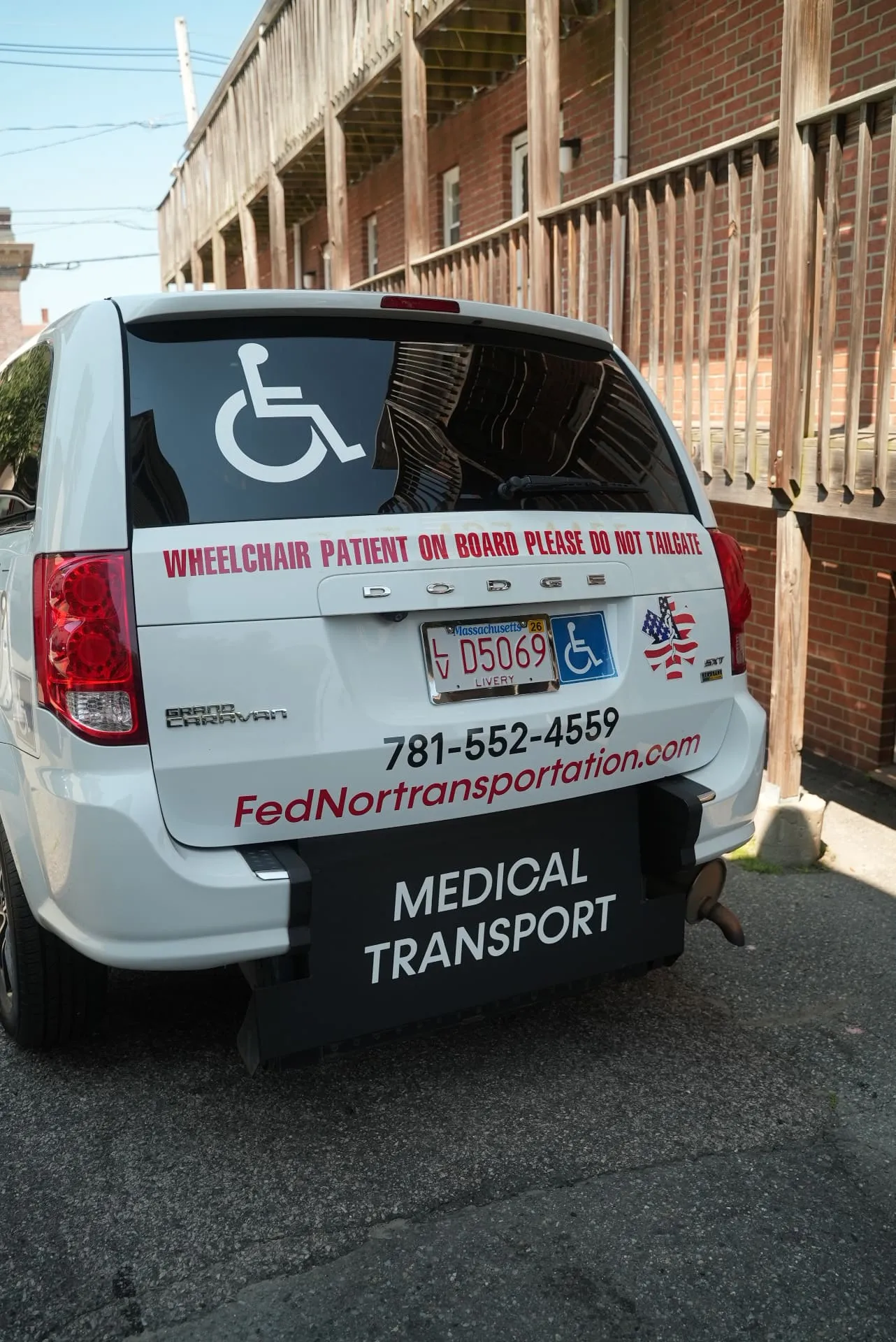
Our fleet includes a wheelchair van capable of accommodating powered wheelchairs exceeding 600 pounds, one of the few in the MetroWest region with that capacity. We work with patients, caregivers, discharge coordinators, and facilities to make every trip smooth and stress-free.
If you or someone you care for needs reliable, professional non-emergency medical transportation in MetroWest Massachusetts, FedNor Transportation is ready to help. Call us at 781-502-4559 or visit fednortransportation.com to schedule your ride today.
Need a ride you can trust?
FedNor Transportation provides safe, dignified non-emergency medical transportation across MetroWest Massachusetts.